Updated August 2026 · Sunglasses fit and face-shape guide
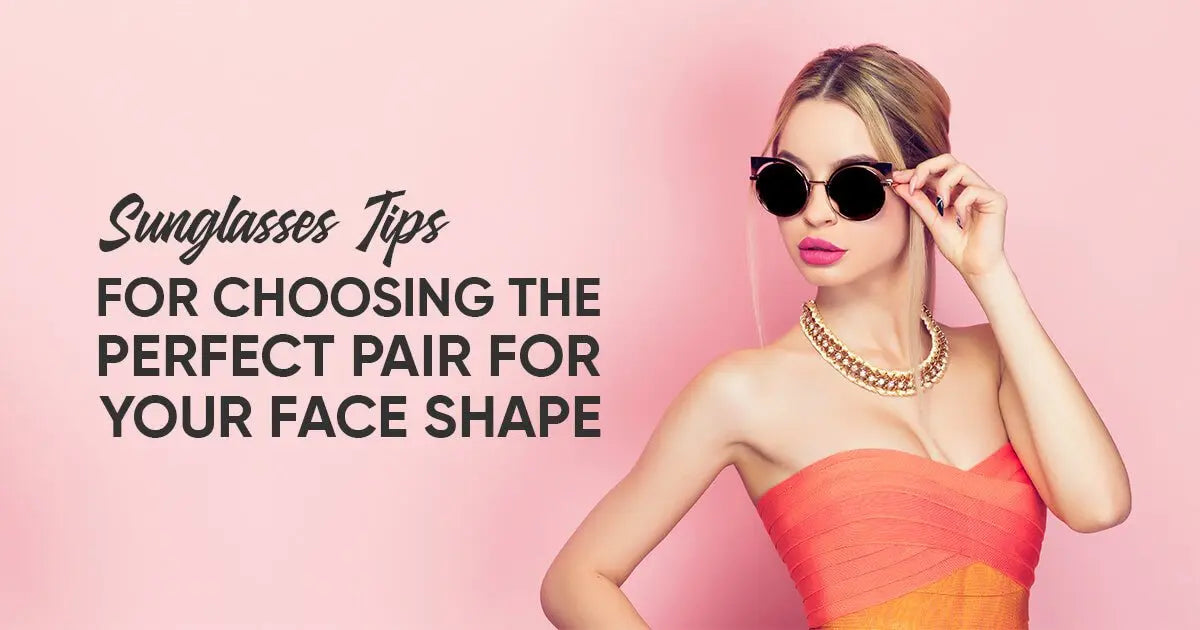
Choosing sunglasses for your face shape can help narrow a large eyewear collection, but face-shape advice works best as a styling shortcut—not a rule. A frame that fits your bridge, sits comfortably on your cheeks and temples, provides the coverage you need and makes you want to wear it is more important than forcing yourself into a “correct” shape.
This New Zealand guide explains the traditional round, oval, square, heart and longer-face suggestions, then adds the fit checks that matter when you are actually buying sunglasses online or in store.
Quick fit rule
Use face shape to explore contrast and proportion, then choose by actual measurements, comfort, lens specification and personal style. If two frames both fit properly, the one you prefer is the better choice.
How to Identify Your General Face Shape
Stand in front of a mirror with your hair away from the face and look at the relationship between forehead, cheekbones, jaw and overall length. You do not need to fit perfectly into one category; many faces sit between two shapes.
- Round: softer curves with similar overall width and length
- Oval: longer than wide with balanced, softly curved proportions
- Square: more pronounced angles through the forehead and jaw
- Heart: broader upper face tapering toward a narrower chin
- Long/rectangular: noticeably more facial length than width
The point is not to label your face exactly. The category simply helps you decide whether you want a frame that adds contrast or follows your existing lines.
Best Sunglasses for Round Faces
Traditional styling advice often pairs round faces with more angular frames because square, rectangular and wayfarer-style shapes create contrast against softer facial curves.
Useful options to try include:
- Square sunglasses
- Rectangular frames
- Wayfarer-style shapes
- Geometric frames
- Medium-to-bold brow lines
But a round frame is not automatically wrong. If the proportions fit and you prefer a softer, retro look, round sunglasses can work very well. Pay attention to width: a frame that is much narrower than the widest part of the face can feel visually and physically cramped.
Best Sunglasses for Oval Faces
Oval faces are often described as versatile because their proportions can accommodate many frame families. That does not mean every size fits.
Try aviators, square frames, cat-eye designs, round frames and oversized styles, then compare how the frame width relates to your cheekbones and how the bridge sits on your nose.
For oval faces, the most common mistake is often scale rather than shape: a frame can overwhelm the face or look too small even when the shape itself is flattering.
Best Sunglasses for Square Faces
People with more angular jaw and forehead lines often like the contrast created by round, oval or curved frames. Aviators can also introduce softer lines while retaining a strong overall silhouette.
Useful shapes to compare include:
- Round sunglasses
- Oval frames
- Aviators
- Soft cat-eye designs
- Rounded square frames
If you prefer a deliberately architectural look, there is no reason to avoid square-on-square styling. The traditional advice is about visual contrast, not a restriction.
Best Sunglasses for Heart-Shaped Faces
A heart-shaped face usually has more visual width through the forehead and cheek area with a narrower chin. Balanced medium-size frames, aviators, softer cat-eye designs and rounded shapes are common starting points.
Rather than focusing only on whether a frame is “top heavy,” check where the outer corners sit relative to your temples and whether decorative details make the upper frame feel larger than you want.
Best Sunglasses for Long or Rectangular Faces
Deeper lenses and frames with more vertical height can add visual width and break up facial length. Oversized square, deep wayfarer-style and larger aviator frames are useful options to test.
Very narrow, shallow frames may emphasise length, but this can also be an intentional fashion choice. Again, personal style can override the traditional balancing rule.
Frame Measurements Matter More Than the Face-Shape Label
When buying online, measurements can be more useful than a face-shape category. Compare a new frame with a pair you already wear comfortably.
Lens Width
Lens width helps indicate the overall scale of each lens. Two frames with the same nominal lens width can still fit differently because shape and bridge design vary.
Bridge Width and Design
The bridge affects where the sunglasses sit on your nose. A frame that slides, pinches or sits too high can be uncomfortable regardless of how flattering the shape looks.
Temple Length
Temple arms should reach comfortably behind the ears without excessive pressure. They should not force the frame forward or allow it to slide constantly.
Lens Height and Overall Coverage
Deeper lenses often give a more oversized look and may provide more coverage. Sport and wrap frames can also reduce light entering from the sides.
How Should Sunglasses Sit on Your Face?
A well-fitting pair should feel stable without needing constant adjustment.
- The bridge should sit securely without painful pressure.
- The temples should feel snug but not tight.
- The lower frame should not repeatedly hit your cheeks when you smile.
- Your eyelashes should not brush the lenses during normal wear.
- The frame should remain reasonably level rather than visibly twisting.
- Looking down should not make the sunglasses immediately slide off.
Eyebrow position is mainly a styling preference. Some frames reveal the brows; others cover part of them. There is no universal rule that sunglasses must fully cover or fully expose your eyebrows.
Face Shape Is Only One Part of Choosing Sunglasses
UV Protection
A flattering frame still needs an appropriate lens specification. Read our UV Protection Sunglasses NZ guide before choosing by tint darkness alone.
Frame Colour
Black, tortoise, crystal, metal and coloured frames can change how strongly the eyewear contrasts with your features. Our Sunglasses for Skin Tone and Hair Colour guide gives you another styling filter if colour matters to you.
Your Main Use
Driving, outdoor sport, travel and fashion wear create different priorities. A wide sport frame may be excellent for cycling but more technical than you want for a formal wardrobe.
Your Personal Style
Classic, minimal, oversized, retro and bold designer frames all communicate something different. If a frame technically “balances” your face but does not feel like your style, you are less likely to wear it.
Quick Face-Shape Starting Guide
| Face shape | Traditional starting point | Fit check |
|---|---|---|
| Round | Square, rectangular, geometric | Avoid frames that feel too narrow |
| Oval | Most shapes | Focus on overall scale |
| Square | Round, oval, aviator | Check bridge and temple comfort |
| Heart | Aviator, rounded, soft cat-eye | Compare visual weight at the brow |
| Long/rectangular | Deeper, oversized, larger aviator | Check lens height and width |
Choosing Sunglasses for Your Face FAQ
How do I choose sunglasses for my face shape?
Identify the broad shape of your face, then use contrast and proportion as a starting point. After that, prioritise bridge fit, frame width, temple comfort, lens specification and personal style.
What sunglasses suit a round face?
Square, rectangular, wayfarer-style and geometric frames are common starting points because they contrast with softer curves. Round frames can still work if you prefer them and the proportions fit.
What sunglasses suit a square face?
Round, oval, aviator and softly curved frames can contrast with a stronger jaw and forehead. Angular frames are also valid if you want a more architectural look.
What sunglasses suit an oval face?
Oval faces can often wear many frame shapes. Focus on size and fit: a frame can still be too wide, narrow, deep or shallow even when the shape works well.
Should sunglasses cover my eyebrows?
There is no fixed eyebrow rule. Some styles sit below the brows while oversized or bold brow-line frames may cover part of them. Choose the look and fit you prefer.
How do I know if sunglasses are too wide?
Very wide frames can slide, place the temples too far from the sides of the head or look disproportionate. Compare the overall width with a comfortable pair you already own.
Can I choose sunglasses online without trying them on?
Yes, but use the listed lens, bridge and temple measurements and compare them with a pair that fits you well. Model photos and face-shape labels are less precise than measurements.
Where can I shop sunglasses in NZ?
Browse Gadgets Online NZ online or visit our Mount Eden, Auckland store. Contact the store first if you want to check availability of a specific model.
Shop Sunglasses by Style and Fit
Browse Luxury Sunglasses NZ, Men’s Designer Sunglasses NZ and Women’s Sunglasses NZ.
For the background behind today’s frame families, explore our Evolution of Sunglasses Styles guide.
Gadgets Online NZ has served New Zealand customers since 2008. Shop online or visit our Mount Eden, Auckland store for authentic designer eyewear and local assistance.