Updated August 2026 · New Zealand outdoor buying guide
The best Oakley sunglasses for New Zealand outdoor use are the pair that match your activity, light conditions and face—not simply the darkest or most expensive model. For fast cycling or running, prioritise stable fit, coverage and an open field of view. Around water and reflective roads, a polarised lens can reduce glare. For hiking and everyday wear, balance coverage with comfort, lens conditions and a shape you will actually keep on.
This guide compares five current Oakley options available from Gadgets Online NZ and explains how Prizm, polarisation, lens shape and frame measurements should influence your choice.
Quick answer
- Fast cycling and high-coverage performance: Oakley Radar EV Path
- Premium cycling design and wide shield view: Oakley Sutro Ti Sweep
- Everyday wear, larger faces and reflected glare: Oakley Holbrook XL Prizm Sapphire Polarized
- Surf-inspired shield style for coast-to-street use: Oakley Hydra
- Bright open conditions with extra side coverage: Oakley Latch Panel
Fit and lens requirements are personal. Check the exact colour code, lens specification and measurements before ordering.
Best Oakley sunglasses in NZ: quick comparison
Radar EV Path OO9208 9208A1
Best for: Cycling, running and fast outdoor sessions
Lens: Prizm Road Jade
Polarised: No polarised label on this variant
Design: 138 mm shield; extended upper field of view
Sutro Ti Sweep OO6025 602505
Best for: Premium cycling and statement shield coverage
Lens: Prizm Road Jade
Polarised: No
Design: Titanium frame; cylindrical sweep shield
Holbrook XL OO9417 941709
Best for: Everyday wear, driving and reflected glare
Lens: Prizm Sapphire Polarized
Polarised: Yes
Design: Square O Matter frame; 59–18–137 mm
Hydra OO9229 922918
Best for: Coastal style and broad shield coverage
Lens: Prizm Jade
Polarised: Not listed as polarised
Design: 137 mm shield; 140 mm temples
Latch Panel OO9404 940401
Best for: Bright open conditions and versatile outdoor use
Lens: Prizm Black
Polarised: No
Design: 135 mm shield with side-focused coverage
Availability can change. These exact variants were active and in stock when checked in August 2026.
Start with the activity, not the frame colour
Oakley makes lifestyle frames, sport shields and designs that sit between the two. Choosing by activity first makes the differences easier to understand.
For cycling and running, look for a stable nose contact, secure temples, useful peripheral vision and enough clearance around your helmet. A taller shield can also help reduce the distraction of a frame edge when you are looking ahead from a forward riding position.
For hiking, comfort over several hours matters as much as coverage. Think about how the frame sits under a cap, whether it slides when you look down and whether the lens is appropriate for the forecast. A bright-light lens may be excellent on an exposed ridgeline yet feel too dark once the track enters dense bush.
For boating, fishing and coastal driving, reflected glare becomes a bigger part of the decision. This is where a genuinely polarised variant can be more useful than selecting by tint colour alone.
For broader advice across brands, see our best sunglasses for outdoor sports guide.

Oakley Prizm vs polarised lenses: what is the difference?
Prizm and polarisation describe different lens features. Oakley says Prizm lenses are engineered to enhance colour and contrast so details stand out more clearly. Polarised lenses use a filter to reduce glare reflected from surfaces such as water, snow and roads.
A Prizm lens is not automatically polarised. Oakley includes the word Polarized in the name when that feature applies. In this guide, the Holbrook XL has Prizm Sapphire Polarized lenses. The Radar EV Path and Sutro Ti Sweep use Prizm Road Jade; the Latch Panel uses Prizm Black; and the Hydra uses Prizm Jade. Do not assume those variants are polarised merely because they are Prizm lenses.
Lens colour is not a shortcut for UV performance either. Check the exact model information rather than judging protection by how dark or mirrored the lens looks. Our UV protection sunglasses NZ guide explains UV claims, lens categories, fit and driving suitability in more detail.
Match the lens to the conditions
- Prizm Road Jade: Oakley lists the exact Radar EV Path and Sutro Ti Sweep lenses in this guide for bright light, with 15% visible light transmission and a rose base colour.
- Prizm Sapphire Polarized: Oakley lists this Holbrook XL lens for bright light, with 12% visible light transmission, a grey base and polarisation for reflected glare.
- Prizm Black: A dark bright-light option on the exact Latch Panel featured here, but not a polarised variant.
- Prizm Jade: A vivid mirrored option on the Hydra featured here; its store specification does not list polarisation.
Visible light transmission describes how much visible light passes through a lens. A lower percentage generally produces a darker viewing experience, but it still does not replace the separate checks for UV protection, driving suitability or fit.

Five Oakley sunglasses to consider for New Zealand adventures
1. Oakley Radar EV Path: best for fast cycling and running
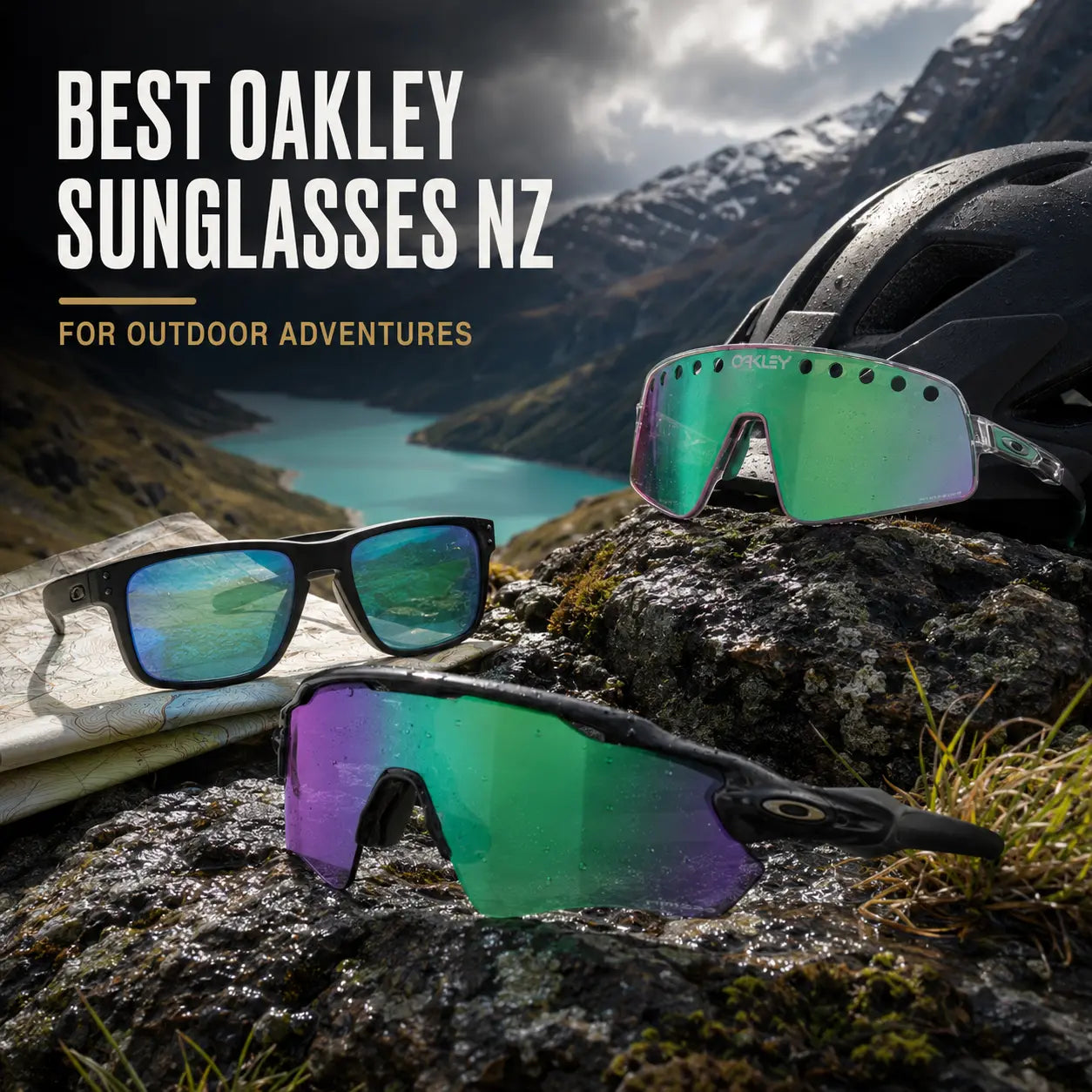
The Oakley Radar EV Path OO9208 9208A1 is the strongest starting point here for riders and runners who want a performance-led shield. Its taller lens is designed to extend the upper field of view, while the O Matter frame keeps the structure lightweight. The exact Steel/Gray and Prizm Road Jade variant has a 138 mm shield, a zero-style shield bridge measurement and 128 mm temples.
Prizm Road Jade is listed by Oakley for bright light. That makes the lens most relevant to exposed roads, summer training and open terrain rather than low-light forest sessions. Because this exact lens name does not include Polarized, choose it for road-focused colour and contrast performance—not specifically for cutting reflected water glare.
Choose it when: you ride or run quickly, prefer a sport shield and want broad forward coverage.
Check first: helmet clearance, nose contact and whether a bright-light lens matches the conditions in which you train most often.
2. Oakley Sutro Ti Sweep: best premium cycling statement
The Oakley Sutro Ti Sweep OO6025 602505 combines a cylindrical sweep shield with a lightweight titanium frame. Oakley also specifies Unobtainium nosepads and earsocks designed to help grip when wet—useful when effort, heat or sudden New Zealand weather adds moisture.
Its exact Prizm Road Jade lens is a non-polarised bright-light option. The main reason to choose the Sutro Ti Sweep over the Radar EV Path is not that one lens is inherently “better”; both examples use Road Jade. The decision is about frame material, visual style, contact points and how the different shield shapes work with your face and helmet.
Choose it when: you want wide cycling coverage with a more premium titanium construction and a distinctive shield profile.
Check first: the narrow/universal fit guidance for the exact model and your preferred helmet position. Compare against a comfortable pair rather than relying on a single width number.

3. Oakley Holbrook XL: best for everyday use and reflected glare
The Oakley Holbrook XL OO9417 941709 is the most conventional everyday shape in this five-model group. Its Grey Smoke O Matter frame uses 59 mm lenses, an 18 mm bridge and 137 mm temples. Oakley positions Holbrook XL as a scaled-up Holbrook for medium to extra-large faces.
The exact Prizm Sapphire Polarized lens is the key distinction. Polarisation can reduce glare from water and wet roads, while the grey base is designed to keep the viewing colour balance comparatively natural. That makes this variant the clearest choice here for coastal days, fishing, daytime driving and everyday wear when reflected glare is a priority.
Choose it when: you want a familiar square frame, need a roomier fit and specifically want polarisation.
Check first: whether the larger frame dimensions suit your face and whether any dashboard or phone displays you use remain clear at your normal viewing angle.
4. Oakley Hydra: best surf-inspired shield for coast-to-street style
The Oakley Hydra OO9229 922918 brings a 137 mm shield and 140 mm temples into a low-profile, surf-influenced shape. The Black Ink frame and Prizm Jade lens create a bolder coastal look than the Holbrook XL.
This exact Prizm Jade specification is not listed as polarised. That distinction matters: the Hydra can deliver broad shield coverage and Prizm colour/contrast enhancement, but buyers specifically trying to reduce strong reflected glare from the water should compare it with a confirmed polarised option such as the Holbrook XL above.
Choose it when: your priority is a single-shield look that moves easily between casual coastal use and everyday style.
Check first: temple length, nose position and whether you need polarisation for your main activity.
5. Oakley Latch Panel: best for bright, open conditions and extra coverage
The Oakley Latch Panel OO9404 940401 uses a 135 mm shield with a Matte Black frame and Prizm Black lens. The design is influenced by Oakley’s shield heritage and adds removable side-shield coverage plus a latch mechanism for clipping the eyewear to clothing.
The exact Prizm Black lens is a non-polarised bright-light option. It is a useful match for exposed tracks, open urban environments and travel when high brightness—not water glare—is the central concern.
Choose it when: you want shield coverage with a more versatile adventure-to-lifestyle design.
Check first: whether you prefer the side-shield feel and whether the bright-light lens is appropriate for your normal route.
Which Oakley should you choose for each activity?
Hiking and trail walking
Start with fit, coverage and the expected light. Radar EV Path offers a performance shield for fast, exposed routes. Latch Panel adds side-focused coverage for bright open terrain. Holbrook XL suits walkers who prefer a conventional frame and roomier fit. On tracks that move repeatedly between sun and dense bush, do not choose a dark bright-light lens without considering how it will feel in shade.
Road cycling and running
Radar EV Path is the straightforward performance choice; Sutro Ti Sweep is the premium, design-led alternative. Test the glasses with your helmet, look down into a riding position and check for slipping at the nose. A frame that looks ideal standing still may sit differently once the helmet and straps are in place.
Coast, boating and fishing
Prioritise a confirmed polarised lens if reflected glare is the problem you want to solve. Of these exact five variants, Holbrook XL Prizm Sapphire Polarized is the clear match. A non-polarised Hydra or Latch Panel may offer the style and coverage you like, but it should not be described as equivalent for glare reduction.

Daytime driving and everyday wear
Holbrook XL provides the most familiar everyday shape and a polarised grey-base lens. Always check the exact lens category and driving suitability; never assume every dark or mirrored sports lens is suitable for every road condition. Polarised lenses can also change how some LCD displays appear, so test the pair with your vehicle if possible.
How to check Oakley fit and size before buying online
Use a comfortable pair you already own as your reference. Measurements are usually printed inside a temple and commonly show lens width, bridge width and temple length. Compare like with like: a conventional two-lens frame such as Holbrook XL uses familiar 59–18–137 measurements, while a single shield may be listed with one overall lens width and a bridge value of zero.
Then check four practical points:
- Nose: the frame should stay stable without pinching or sliding.
- Temples: the arms should sit securely without creating pressure behind the ears.
- Coverage: look for distracting gaps above, below and at the sides.
- Activity position: test the frame while looking down, leaning forward and wearing your usual cap or helmet.
If you are choosing primarily by appearance, our guide to sunglasses for your face shape adds shape and proportion advice. Measurements and an actual try-on remain more reliable than face-shape labels alone.
A final five-point Oakley buying check
Before ordering, confirm:
- The exact Oakley model and colour code—not just the family name.
- Whether the lens is Prizm, Prizm Polarized or another specification.
- The light conditions the lens is designed for.
- Frame measurements and helmet or cap compatibility.
- Live availability, returns information and the seller’s authenticity policy.
You can compare the current range in our Oakley sunglasses NZ collection or browse Oakley men’s sunglasses. Gadgets Online NZ offers online ordering and local assistance from Mount Eden, Auckland.
Frequently asked questions
Are Oakley sunglasses good for New Zealand outdoor use?
Oakley offers sport shields, lifestyle frames, Prizm lens choices and confirmed polarised variants that can suit many New Zealand outdoor activities. The brand name alone does not identify the best pair: match the exact lens, fit and coverage to your activity and light conditions.
Which Oakley sunglasses are best for hiking?
There is no single best model for every track. Radar EV Path is a strong performance option for fast, exposed routes; Latch Panel offers bright-light shield coverage; and Holbrook XL suits hikers who prefer a conventional, roomier frame. Consider transitions between open sun and bush shade before choosing a dark lens.
Are all Oakley Prizm lenses polarised?
No. Prizm is Oakley’s colour-and-contrast lens technology; polarisation is a separate glare-reduction feature. Look for “Polarized” in the exact lens name. The Holbrook XL in this guide is Prizm Sapphire Polarized, while the Road Jade, Jade and Black examples are not listed as polarised variants.
Which Oakley is best for cycling?
Radar EV Path is the most performance-focused cycling option in this comparison. Sutro Ti Sweep is the premium alternative, with a titanium frame and broad cylindrical shield. Fit, helmet clearance and stability should decide between them.
Do darker Oakley lenses give more UV protection?
Lens darkness controls visible brightness; it does not prove UV performance by itself. Check the manufacturer’s UV claim and the exact lens specification. Also confirm driving suitability if the sunglasses will be used on the road.
Can I try Oakley sunglasses in Auckland?
Gadgets Online NZ provides local assistance from Mount Eden, Auckland. Contact the store before travelling to confirm that the exact model and colour code you want is available to view.
Product specifications and availability were checked in August 2026. This guide is general buying information, not prescription or safety-eyewear advice.