Quick answer
The best long-lasting perfume is not simply the bottle with “EDP” or “Parfum” on the label. Look at the whole formula, test it on your skin, apply it consistently and judge both projection and dry-down. A fragrance can remain detectable for a long time while sitting close to the skin—and a scent that starts loudly can still fade quickly.
| Factor | What it can change | Best response |
|---|---|---|
| Concentration | How much fragrance material is present and how the composition is balanced | Use the label as a guide, not a wear-time promise |
| Formula | How quickly different materials lift, develop and settle | Judge the full dry-down, not only the first spray |
| Skin | How individual fragrance molecules evaporate or remain on the surface | Test on your own skin on more than one day |
| Application | Projection, scent trail and where the fragrance remains | Keep sprays and placement consistent while testing |
| Weather | How quickly a scent diffuses and how strongly it is perceived | Adjust placement or reapplication for the conditions |
| Storage | How well the bottle retains its original character over time | Protect it from heat, direct light and unnecessary air exposure |
Long-lasting does not mean loud all day
When people search for long-lasting perfume in NZ, they often mean one of three different things. Separating them makes it much easier to compare fragrances fairly.
A fragrance may project strongly for a short opening, then settle into a close skin scent that lasts much longer. Another may stay soft from the beginning but remain detectable at the end of the day. Neither is automatically better: the right performance depends on whether you want discretion at work, presence outdoors or a more noticeable evening scent.
That is why fixed promises such as “lasts 12 hours” are unreliable as universal buying advice. Wear time is a personal observation, not a guaranteed product specification.
Concentration helps—but the label is not a stopwatch
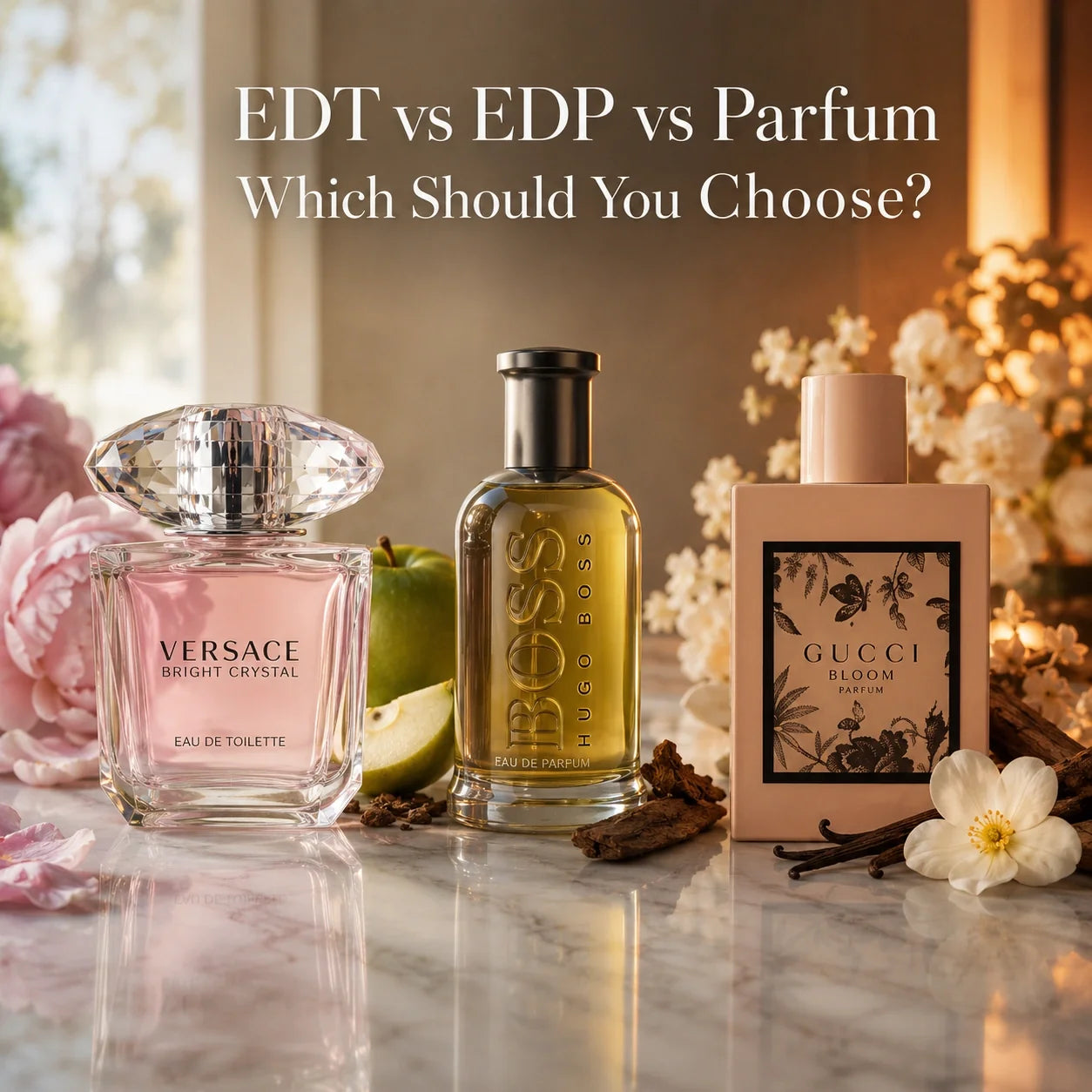
Terms such as Eau de Toilette, Eau de Parfum and Parfum give useful context, but they do not create an exact global performance scale. The International Fragrance Association notes that these descriptors are based on common industry practice rather than one strict international definition, and typical concentration ranges overlap.
A higher concentration can support greater depth or a longer dry-down, yet two fragrances with the same label may perform very differently. Brands also often rebalance different versions of a scent instead of merely adding more of the same formula. An airy Eau de Parfum can therefore feel quieter than a structured Eau de Toilette, while a Parfum may wear closer to the skin rather than projecting more widely.

The formula and dry-down decide what remains
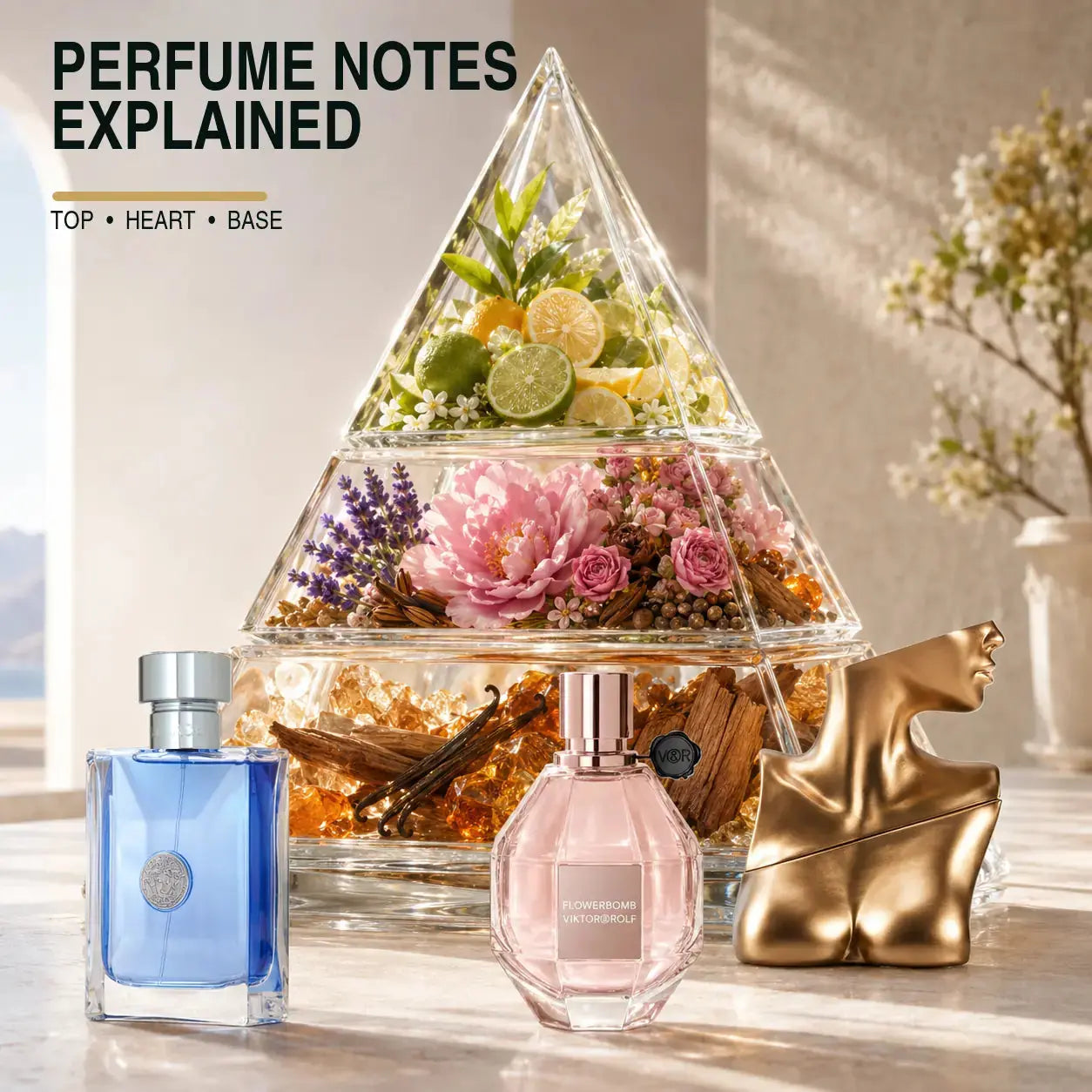
Perfume is a mixture of materials with different volatilities and different relationships with skin. Lighter materials tend to appear quickly in the opening; less volatile materials may become more noticeable later. This is the practical idea behind top, heart and base notes, although a real formula develops more continuously than a three-step pyramid suggests.
Fresh citrus, aromatic or watery effects can create a vivid first impression without necessarily producing a dense, long dry-down. Woods, musks, amber effects, resins and some sweet materials can contribute to a more persistent base—but no single note guarantees performance. Its dose, supporting materials and the structure of the composition all matter.
This also explains why judging a fragrance in the first five minutes can be misleading. The opening tells you whether you enjoy its first impression. The later dry-down tells you whether you enjoy living with it and whether its style of performance suits your day.
If the fragrance pyramid feels confusing, our perfume notes guide explains how top, heart and base notes develop.

Your skin changes the result
“Skin chemistry” is often used as a catch-all explanation, but the useful reality is more specific. Skin hydration, surface texture, lipids, temperature and transepidermal water loss can influence how individual fragrance materials evaporate. A 2025 in-vivo study in the International Journal of Cosmetic Science found that skin properties affected different fragrance molecules in different ways.
That means there is no simple rule that every perfume will always last longer on one “skin type”. A material that lifts quickly from one surface may behave differently from a heavier, more lipophilic material in the same formula. The complete perfume—and the person wearing it—must be considered together.
A practical skin-preparation test
- On one wear, apply the fragrance to clean, dry skin.
- On another wear, use the same number of sprays after an unscented moisturiser has absorbed.
- Keep the location, weather and activity as similar as practical.
- Compare the opening, projection and end-of-day dry-down separately.
Moisturiser may change how the fragrance is retained and released, but treat it as a personal test rather than a guaranteed hack. If your skin is sensitive, follow the product directions and stop using any product that causes irritation.
Application changes wear more than most people realise
Where and how you spray can change both how long perfume remains and how other people experience it. Exposed areas such as the sides of the neck can give more immediate diffusion. The upper chest or torso can create a steadier, closer scent bubble. Clothing may retain some fragrance materials differently from skin, but perfume can mark delicate or pale fabrics, so test a hidden area first and follow garment-care guidance.
For a fair performance test
- Keep the spray count consistent. More sprays change the dose, so they do not prove that one formula lasts longer.
- Let the fragrance dry naturally. There is no need to rub wrists together; spreading and warming the wet fragrance can alter how you experience the opening.
- Avoid competing scents. Strong body wash, lotion, hair products or another perfume can make the result difficult to read.
- Match the setting. A comfortable level at home may be too much in a small office, aircraft cabin or shared car.
- Reapply deliberately. If a lighter scent suits you, a small sample or travel spray can be more practical than over-applying in the morning.

New Zealand weather changes how a fragrance performs
A long-lasting perfume can feel different across New Zealand conditions. Warmth often gives volatile materials more lift, so a scent may project more noticeably at first and move through its opening faster. Cooler conditions can make the same fragrance seem quieter, especially on exposed skin. Wind disperses scent, while humidity and individual skin response make the outcome less predictable than a simple “summer versus winter” rule.
In practical terms, a fragrance worn on a humid Auckland afternoon may not behave exactly as it does in a cool Wellington wind or dry Central Otago air. Indoor heating, air conditioning, clothing layers and activity can matter as much as the forecast.
Adjust the method, not just the bottle
- In warm weather, start with a lighter application and judge it outdoors as well as indoors.
- In cooler weather, applying beneath a clothing layer can create a more sheltered, gradual release.
- On windy days, do not assume the perfume has disappeared simply because you cannot detect a trail around you.
- If you move between air-conditioned rooms and outdoor heat, reassess before adding more.
For scent-family ideas by season, see our summer vs winter perfume guide and our focused guide to winter perfumes in NZ.

Storage protects the performance you paid for
Application affects today’s wear; storage helps preserve the bottle across months and years. Fragrance houses including Chanel advise protecting perfume from heat, direct light and unnecessary air exposure.
- Keep the cap secure or the atomiser protected when it is not in use.
- Store the bottle upright in a cool, stable place away from direct sun.
- A drawer, cupboard or original box is usually more suitable than a bright windowsill.
- A steamy bathroom can experience repeated temperature changes, so a bedroom cupboard is often a steadier choice.
- Do not transfer a full bottle unnecessarily; every transfer adds handling and air exposure.
You do not need to refrigerate most perfume unless the manufacturer specifically says so. Consistency and protection from extremes are more useful than chasing an unusually cold storage temperature.
Sometimes the perfume remains—but your nose has switched it out
Olfactory adaptation is a real change in perception after continued exposure to an odour. Research has shown that exposure can reduce perceived intensity and sensitivity to the same odour. In daily wear, this is often called “nose blindness”.
Because your fragrance sits close to your face, you may stop noticing it before other people do. Before reapplying, step into fresh air, smell something neutral and ask someone you trust whether they can still detect it at a normal conversational distance. Avoid repeatedly smelling the exact application point; that tests a concentrated spot and accelerates sensory fatigue.
How to test perfume longevity before buying a full bottle
A sample gives more useful information than a one-minute paper-strip test. Wear the fragrance through the situations that matter to you: commuting, office hours, outdoor time or an evening out. Two or three controlled wears are usually more informative than one unusually hot, cold or active day.
The four-check wear test
Use the same spray count and placement each time. Note intensity in plain language rather than trying to assign a perfect score.
Do you enjoy the first impression?
How noticeable is it after the opening settles?
What remains later, and do you still enjoy it?
Was the projection suitable for your day?
Explore perfume samples in NZ to test selected scents before choosing a larger bottle.
How to choose a long-lasting perfume without buying on claims alone
Prioritise controlled projection and a dry-down you enjoy up close. The loudest opening is not necessarily the best choice.
A richer structure or stronger projection may suit the setting, but test how it develops rather than relying on concentration alone.
Accept that an airy style may need a planned reapplication. Freshness and maximum persistence are not always the same goal.
Wear a sample several times, check the late dry-down and make sure the projection fits the places you visit most.
When shopping, read the concentration and note profile, then ask the more useful question: how does this fragrance perform on me, in my normal day, at a level I enjoy? That approach is more dependable than choosing a bottle because one review promises a fixed number of hours.
Find your fragrance, then test the performance
Browse active fragrance ranges for men, women and unisex wear, or start with a sample. Gadgets Online NZ has served New Zealand customers since 2008, with online shopping and a physical store in Mount Eden, Auckland.
Frequently asked questions
Which type of perfume lasts the longest?
Parfum and extrait formats often contain more fragrance material than EDT or EDP, but the label alone does not guarantee the longest wear. Formula structure, skin, application and conditions all matter. Compare the whole fragrance and test it on your skin.
Is Parfum always longer-lasting than Eau de Parfum?
No. Parfum can offer a deeper or longer dry-down, but some formulas wear close to the skin and some EDPs project more strongly. Concentration terms also use overlapping industry ranges rather than one universal standard.
Why does perfume not last on my skin?
The fragrance may be naturally light, your skin may release parts of the formula quickly, the application may be exposed to heat or wind, or you may have adapted to the smell. Test the same application on another day and ask someone else whether they can still detect it.
Does moisturiser make perfume last longer?
An unscented moisturiser can change the skin surface and may help some fragrance materials remain or release differently. Results vary by formula and skin, so compare moisturised and unmoisturised wears using the same spray count.
Does perfume last longer on clothes or skin?
Some materials can remain noticeable on fabric longer than on skin, while skin gives the fragrance warmth and a more personal development. Fabric response varies and perfume can stain delicate materials, so check garment guidance and test a hidden area first.
Does New Zealand summer make perfume fade faster?
Warmth can increase early diffusion and may move a fragrance through its opening faster, but humidity, wind, skin and formula complicate the result. Start with a controlled application and reassess before adding more.
Is poor longevity a sign of fake perfume?
No. Poor perceived longevity does not authenticate a bottle. Evaluate the retailer, packaging, exact version, batch information and support together, and remember that formula, skin, climate and olfactory adaptation all affect wear.
How should I store perfume so it keeps its quality?
Keep the bottle closed, upright and away from direct light, heat and large temperature swings. A cupboard, drawer or original box is usually suitable. Follow any brand-specific directions supplied with the product.
Sources and further reading
- International Fragrance Association: using the standards — explains that concentration labels are common industry descriptors rather than strict international definitions.
- Hadjiefstathiou et al. (2025), International Journal of Cosmetic Science — in-vivo research on fragrance-molecule evaporation and skin properties.
- Dalton & Wysocki, The nature and duration of adaptation following long-term odor exposure — research on odour-specific adaptation and perceived intensity.
- Chanel Fragrance & Beauty FAQ — manufacturer guidance on protecting fragrance from heat, air and light.
Editorial note: Fragrance performance varies. This guide explains the main factors and a repeatable test method; it does not promise a fixed wear time for any product.